Stop Worrying About Baby Milestones: What Development Really Looks Like
Milestone charts are guides, not grades. Learn what developmental science says about normal baby development and how to feel confident as a parent.

By Anat Furstenberg, Child Development Specialist · 20+ years
March 27, 2026·5 min read

arrow_downwardJump to section
Key Takeaways
- check_circleMilestones are ranges, not deadlines. Every baby develops on her own timeline, and the sequence of development matters more than the precise date any skill appears.
- check_circleResponsive caregiving, including touch, eye contact, and consistent interaction, is the foundation of every developmental milestone. The work you are already doing every day is developmental support.
- check_circleMilestone anxiety is normal, but redirecting your focus toward the quality of daily interactions rather than comparison with other babies will serve both you and your baby far better.
If you have ever found yourself awake at 2am, phone in hand, scrolling through milestone charts and wondering whether your baby is "on track," you are not alone. The urge to measure, compare, and worry is one of the most universal parts of early parenthood. But here is something worth sitting with tonight: milestones are guides, not grades. In this post, we are going to explore why milestone anxiety is so common, what developmental science actually tells us about the range of normal, how touch and communication lay the foundation long before any "official" milestone appears, and what you can do right now to feel more grounded and confident as a parent. Take a breath. You are already doing better than you think.
Why Milestone Worry Happens (and What Development Really Looks Like)
Milestone charts were designed to give families and clinicians a shared language for tracking growth. The problem is that a chart flattens something that is inherently three dimensional. Real baby development is layered, looping, and deeply individual. A baby is not a checklist. She is a whole nervous system, a sensory learner, a tiny person building her understanding of the world one interaction at a time, and that process does not follow a tidy calendar.
One of the most important things developmental specialists observe is that babies move through stages in a sequence, but the timing within that sequence varies enormously from child to child. Consider baby crawling, for example. Before a baby can push forward on all fours, she first needs to develop a sense of direction in space, learn to move around her own axis, and build enough body awareness to understand where her limbs are in relation to the floor. That groundwork is invisible to parents watching from the outside. What looks like "nothing is happening yet" is often a tremendous amount of internal preparation.
The same is true for communication. According to developmental research, communication begins the moment a baby is born. A newborn communicates through crying from day one, and every sensitive, consistent response a parent gives teaches the baby that communication works and that the world is a safe place. Baby brain development in these earliest weeks is shaped by the quality of those back and forth exchanges, not by whether a baby hits a particular milestone on a particular day. Around 8 to 10 weeks, a baby's smile shifts from an involuntary reflex to a voluntary, joyful social response. That is a landmark moment, but what made it possible was weeks of warm eye contact, responsive touch, and consistent caregiving that you were probably providing without even realizing it.
Touch deserves its own moment here, because it is so foundational and so often overlooked in milestone conversations. From the very first moments of life, touch is the primary channel through which a baby learns about the world. When touch is pleasant, appropriate, and consistent, it has a profound impact on a baby's character, emotional development, and physical growth. The way you hold your baby, the way you respond when she fusses, the gentle pressure of skin to skin contact, all of this is developmental work. It is not separate from milestones. It is the soil in which every milestone grows.
This is why experts who work with babies emphasize sensory experience as a prerequisite for motor milestones. For example, tummy time exercises are not just about building arm strength. They are about sending messages through the body to the brain, helping a baby feel where she is in space, and building the sensory foundation that will eventually support crawling, sitting, and standing. When you do tummy time with your baby, you are not just checking a box. You are giving her nervous system exactly what it needs.
It is also worth understanding that development at every age involves two layers: what you can see and what is quietly organizing underneath. During newborn development, for instance, a baby appears to do very little in terms of visible milestones. But internally, her balance system is calibrating, her sensory pathways are forming, and her social brain is learning to recognize the face, voice, and touch of her primary caregivers. None of that shows up on a milestone chart. All of it matters enormously. The World Health Organization's child growth standards acknowledge that healthy development encompasses a wide range of normal timelines, and that context, environment, and caregiver responsiveness are all part of the picture.
For parents who are exploring 6 month milestones or tracking development across the first year, it helps to zoom out. At 6 to 9 months, a baby is beginning to understand that she can reach an object through a sequence of intentional actions, making eye contact, extending her hand, shifting her weight. That is a remarkable cognitive and motor achievement. But it builds on thousands of smaller moments of sensory learning, movement, and responsive connection that came before it. The milestone is the visible tip. The relationship and the sensory environment are the iceberg beneath. The CDC's milestone resources reinforce that development is a continuum, and that early, engaged caregiving is one of the strongest predictors of healthy outcomes.
So when you feel the pull of comparison, when you wonder why your neighbor's baby is already doing something yours is not, try to redirect that energy. Ask not "is my baby behind?" but rather "am I creating the conditions for her development to unfold?" Are you responding to her cues? Are you giving her varied sensory experiences? Are you making warm eye contact and talking to her throughout the day? Those questions are far more useful, and far more within your control.
Practical Tips for Parents
- Focus on the quality of your daily interactions rather than tracking specific skills. Warm, responsive caregiving, including eye contact, touch, and talking, supports every area of development simultaneously.
- Use a baby milestone tracker as a broad guide rather than a strict schedule. Treat the ranges as windows, not deadlines, and note what your baby is doing rather than what she is not doing yet.
- Prioritize sensory play at every stage. Familiarizing your baby with different textures, movements, and body positions such as during tummy time helps her nervous system build the foundation for upcoming milestones.
- When you feel milestone anxiety rising, write down three things your baby did today that showed curiosity, connection, or effort. Shifting your lens to what is present rather than what is absent changes everything.
- Consider structured guidance through online baby classes led by developmental specialists. Having a week by week framework can replace anxious Googling with purposeful, grounded activity.
When to Talk to Your Doctor
While most milestone variation falls well within the range of normal, there are certain signs worth discussing with your pediatrician. These include an inability to make eye contact by 2 to 3 months, no smiling by 3 months, no reaching or babbling by 6 months, or persistent crying that cannot be soothed. If your baby has a known condition or you have ongoing concerns about developmental delays, early support from a specialist can make a meaningful difference. Trust your instincts, and never hesitate to ask a professional. Reaching out is always the right call when something feels off.
Frequently Asked Questions
Want to go deeper?
Get the full development system for your baby
Week-by-week guidance, milestone tracking, and expert video classes, all in one place.
See Plans & Pricingarrow_forwardYou May Also Like
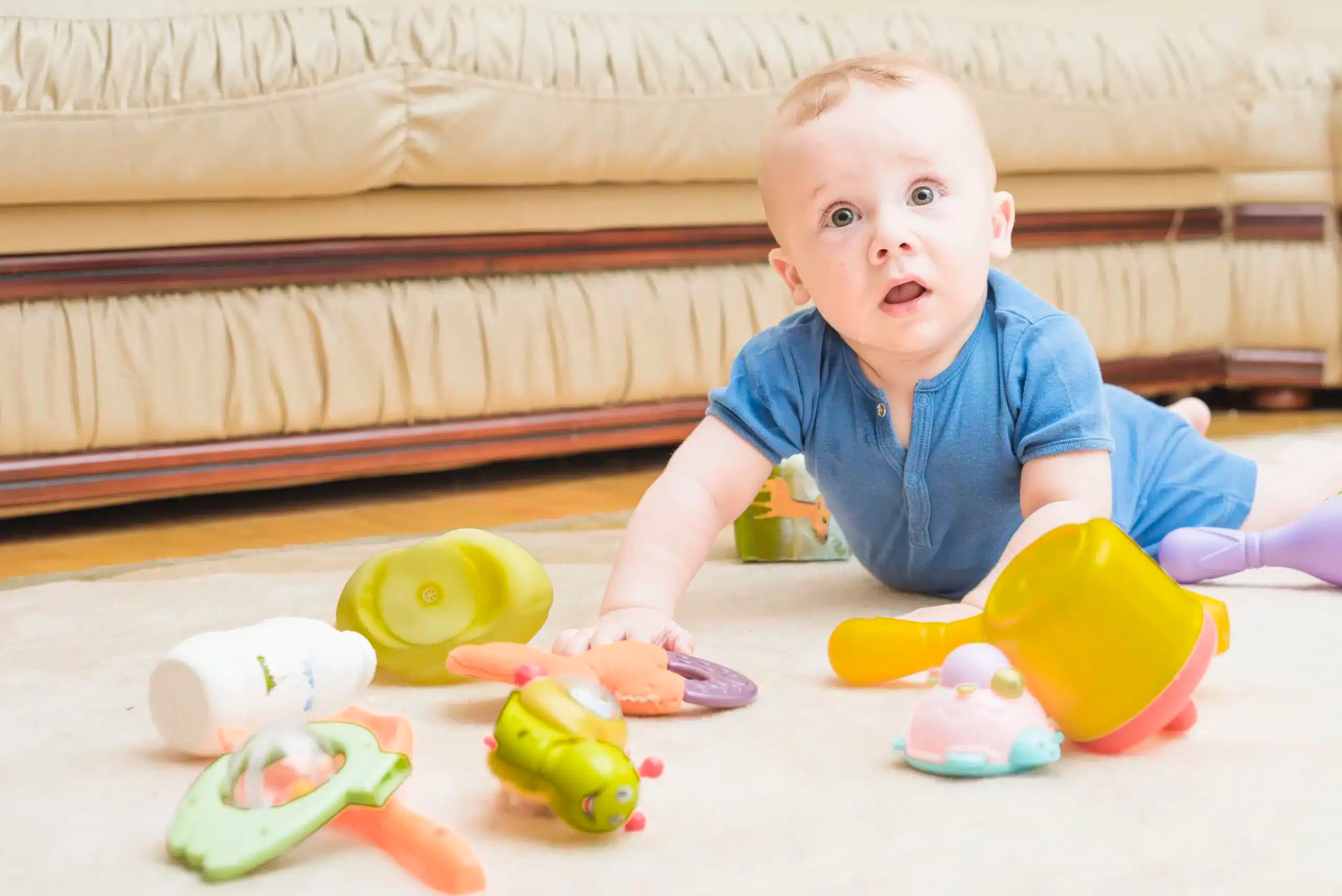
6 Month Old Baby Activities And Developmental Milestones
Fostering Early Development: A Guide to 6-Month-Old Baby Activities. Discover the foundations of your 6-month-old's growth journey. Learn how pivotal early development is, and why building a strong bond with your baby matters. Explore the keys to creating a safe, stimulating environment and the importance of routine. Find out why parental support and self-care are essential for a fulfilling parenting experience.
Read Morearrow_forward
Your Ultimate Guide: Activities for 3 Month Old Infants
Introduction to activities for 3-month-olds: Explore 29 creative ways to play and learn with your baby during their critical early months. From sensory playtime to heartwarming cuddles, each activity fosters sensory development and strengthens your bond. Adapt activities to your baby's unique pace and preferences, always prioritizing safety and comfort. Cherish these early moments of discovery.
Read Morearrow_forward
Your 3 Month Old Baby Activities And Developmental Milestones
Fostering Your 3-Month-Old's Growth: Activities & Milestones At 3 months, your baby enters a world of swift development. Discover how early engagement bolsters the parent-child bond, language skills, and physical growth. Explore sensory play's role in cognitive and emotional development through texture, color, and sound. Embrace music and movement for brain stimulation and emotional expression. Join our journey in nurturing your baby's growth.
Read Morearrow_forward