Milestone Anxiety in New Parents: What to Know Tonight
Worried your baby is behind? Learn why milestone anxiety happens, what normal development looks like, and how to feel calmer tonight.

By Anat Furstenberg, Child Development Specialist · 20+ years
March 17, 2026·8 min read

arrow_downwardJump to section
Key Takeaways
- check_circleMilestone windows are wide ranges, not fixed deadlines. Most variation in timing is completely normal and reflects the deeply individual nature of child development.
- check_circleYour presence, warmth, and responsive engagement matter more than any single milestone. Play, connection, and safe exploration are the real engines of healthy development.
- check_circlePersistent anxiety that does not ease with reassurance is worth addressing, both for your sake and your baby's. Postpartum anxiety is common and treatable, and you deserve support too.
If you are reading this at 2am, heart racing, phone in hand, comparing your baby to every developmental chart you can find online first, take a breath. You are not alone. Milestone anxiety is one of the most common and deeply uncomfortable experiences of new parenthood. The fear that your baby might be "behind," or that you are somehow missing something important, can feel completely overwhelming. This post is here to help you understand what milestone anxiety actually is, why it happens, why development is far more variable than any chart suggests, and what you can do tonight to feel more grounded. We will also walk through some practical tools, gentle red flags worth discussing with your doctor, and answers to the questions parents ask most at moments exactly like this one.
Why Milestone Anxiety Feels So Intense And What Baby Development Actually Looks Like
Milestone anxiety is not a sign that something is wrong with your baby. It is often a sign that you are an attentive, caring parent who wants the very best for your child. But the way we tend to think about milestones, as fixed deadlines on a rigid timeline can make normal development feel terrifying. The truth is that baby brain development is not a straight line. It is a deeply individual, layered process that unfolds differently in every child.
Development happens across multiple domains at once. Your baby is building physical strength, emotional regulation, sensory processing, social awareness, and cognitive skills all at the same time. When energy goes heavily into one area, another area may appear to pause or slow. This is completely normal. A baby who is intensely focused on learning to pull to stand may temporarily seem less chatty. A baby going through a language explosion may not seem as interested in physical exploration for a few weeks. These are not warning signs. They are signs of a brain doing exactly what it is supposed to do.
One thing that makes milestone anxiety worse is the way information is often presented to parents. Charts and apps tend to list milestone ages as if they are precise deadlines, when in reality each milestone comes with a wide window of normal variation. The CDC's developmental milestones are designed as broad guidelines, not individual scorecards. When you read "babies typically do X by Y months," that range can span weeks or even months, and still be completely within the range of healthy development.
It also helps to understand what development is actually building toward. Every movement your baby makes, every reach, every roll, every moment of tummy time, is laying down neural pathways that support future learning. Tummy time exercises, for example, are not just about strengthening the neck and shoulders. They are building the foundation for crawling, for visual focus, for core stability, and for the crossing of the body's midline that later supports reading and writing. Development is always building something deeper than what you can see on the surface.
Emotional and behavioral development is equally layered and equally hard to observe from the outside. A baby who seems clingy, fussy, or suddenly unsettled may be going through a developmental leap that is invisible to the naked eye. These periods of apparent regression are often followed by noticeable leaps forward. Understanding this rhythm can help you hold those difficult stretches with more patience and less fear.
One of the most important things to understand about baby development at 6 months and beyond is that babies develop through interaction, play, and safe exploration rather than through pressure or performance. The quality of the environment you provide, your responsiveness, your warmth, your willingness to get on the floor and play, matters far more than whether your baby hits a specific milestone on a specific day. Research consistently shows that secure attachment and responsive caregiving are among the strongest predictors of healthy development across every domain.
Parental anxiety itself is worth naming here. When we are anxious, we naturally scan for problems. We notice every small thing and tend to interpret it through a lens of worry. This is not a character flaw. It is how anxious brains work. But it can mean that we see concerning signs in things that are actually completely typical. If you find yourself checking your baby constantly, comparing them to other babies, or feeling a persistent dread that something is wrong despite reassurance, it is worth talking to someone. Postpartum anxiety is real, it is common, and it is treatable. You deserve support too.
For parents who do have specific concerns about their child's development, there is a great deal of help available. Learning about developmental delays early and getting the right support can make a meaningful difference. Early intervention programs exist precisely because the earlier a child receives targeted support, the better the outcomes tend to be. Knowing this is not a reason to panic. It is a reason to stay connected with your child's pediatrician and to trust your instincts when something genuinely does not feel right. According to the American Academy of Pediatrics, regular developmental screening at well-child visits is the best way to catch any genuine concerns early, long before a worried 2am Google spiral could.
The bottom line is this: your baby is an individual. Their development belongs to them. Your job is not to make them hit milestones on schedule. Your job is to be present, engaged, and responsive, to provide a safe and loving environment, and to notice and celebrate the small, daily signs of growth that no chart can fully capture. That is more than enough.
Practical Tips for Parents
- Put down the milestone charts for a few days. Instead of measuring your baby against a list, spend time simply observing them with curiosity. Notice what they are interested in, what makes them laugh, and how they are exploring their world right now.
- Use a baby milestone tracker that gives you context and ranges rather than fixed dates. Seeing the full window of normal can immediately reduce anxiety and give you a more accurate picture of where your baby is.
- Invest in daily floor time and interactive play. Get on the floor with your baby, follow their lead, and let them explore. Active, playful engagement supports development across every domain and also deepens your bond, which helps calm your own nervous system.
- Name what you see and celebrate effort rather than outcomes. When your baby tries something new, whether they succeed or not, narrate it warmly. "You worked so hard to reach that toy!" This kind of encouragement supports both development and emotional security.
- Reach out to your pediatrician with specific observations rather than general worries. Instead of saying "I think something is wrong," try "I have noticed that my baby is not yet doing X, and I wanted to check in." Concrete observations help your doctor give you genuinely useful information, and the conversation itself is usually deeply reassuring.
When to Talk to Your Doctor
Most milestone anxiety resolves with reassurance and a bit of perspective. But there are times when it is absolutely right to bring your concerns to a professional. If your baby has lost a skill they previously had, if they are not responding to sounds or faces, if you notice significant differences in muscle tone, or if your instincts are telling you that something is genuinely not right, please do not wait. You know your baby better than anyone. Your pediatrician is your partner in this, not a gatekeeper. Bringing up a concern is always the right call, and early support, when needed, makes a real difference.
Frequently Asked Questions
Want to go deeper?
Get the full development system for your baby
Week-by-week guidance, milestone tracking, and expert video classes, all in one place.
See Plans & Pricingarrow_forwardYou May Also Like
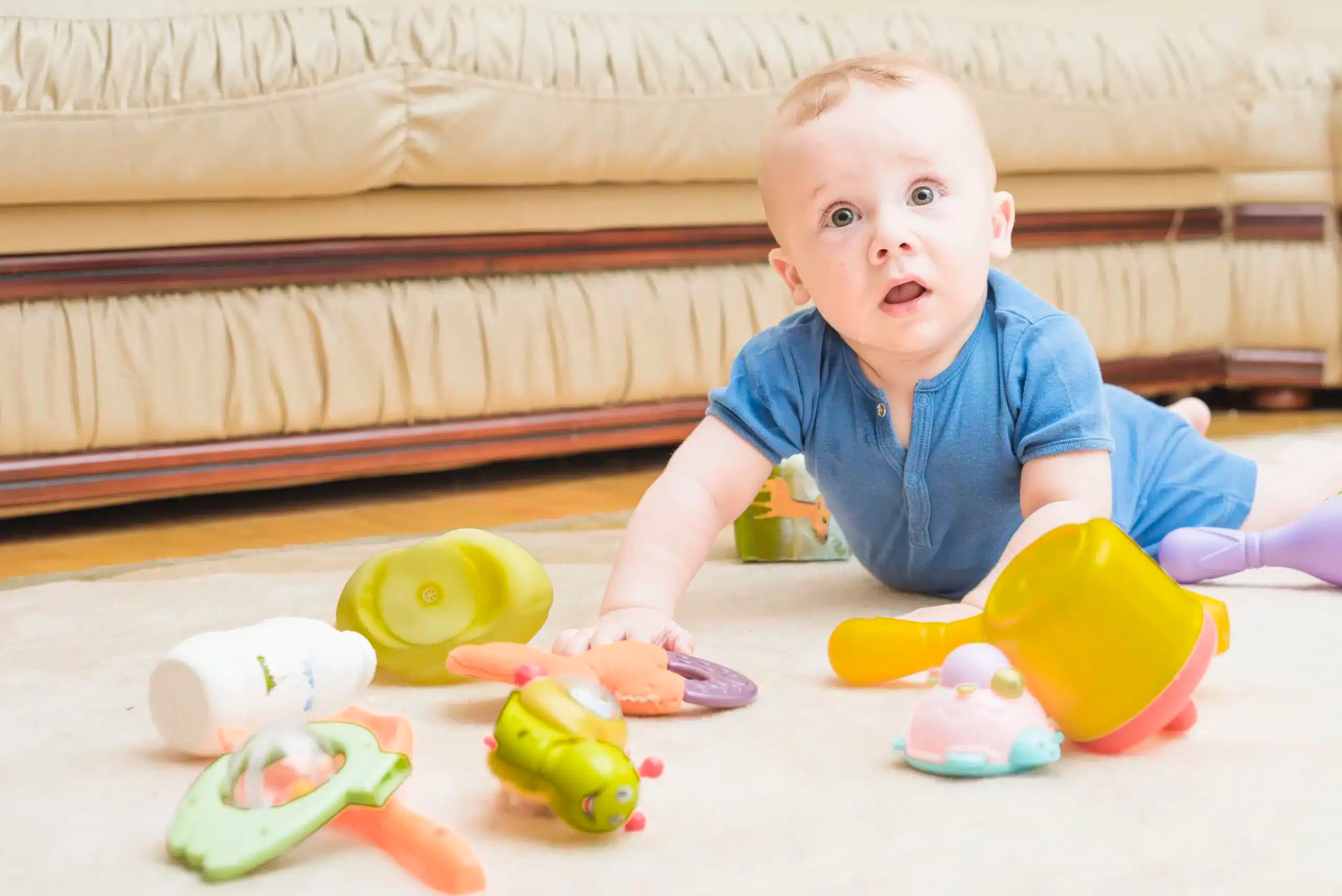
6 Month Old Baby Activities And Developmental Milestones
Fostering Early Development: A Guide to 6-Month-Old Baby Activities. Discover the foundations of your 6-month-old's growth journey. Learn how pivotal early development is, and why building a strong bond with your baby matters. Explore the keys to creating a safe, stimulating environment and the importance of routine. Find out why parental support and self-care are essential for a fulfilling parenting experience.
Read Morearrow_forward
Your Ultimate Guide: Activities for 3 Month Old Infants
Introduction to activities for 3-month-olds: Explore 29 creative ways to play and learn with your baby during their critical early months. From sensory playtime to heartwarming cuddles, each activity fosters sensory development and strengthens your bond. Adapt activities to your baby's unique pace and preferences, always prioritizing safety and comfort. Cherish these early moments of discovery.
Read Morearrow_forward
Your 3 Month Old Baby Activities And Developmental Milestones
Fostering Your 3-Month-Old's Growth: Activities & Milestones At 3 months, your baby enters a world of swift development. Discover how early engagement bolsters the parent-child bond, language skills, and physical growth. Explore sensory play's role in cognitive and emotional development through texture, color, and sound. Embrace music and movement for brain stimulation and emotional expression. Join our journey in nurturing your baby's growth.
Read Morearrow_forward