Early Signs of Autism in Babies: What Parents Should Know
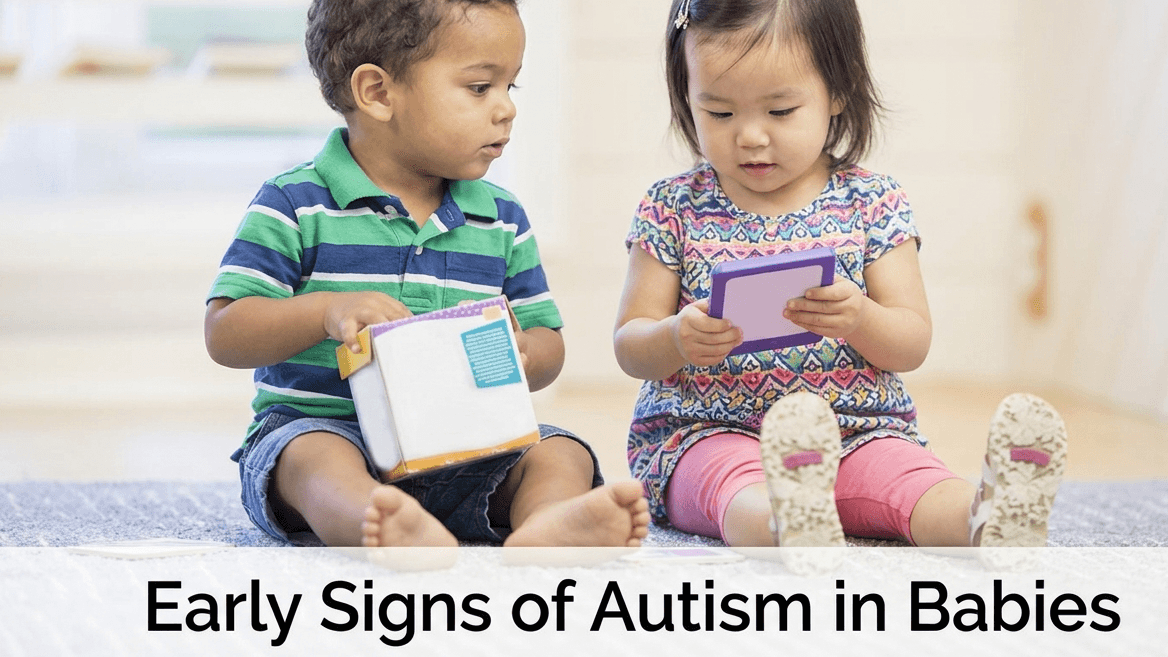
Worried about your baby's development? Learn the early signs of autism in babies and toddlers and what you can do to support your child right now.

By Anat Furstenberg, Child Development Specialist · 20+ years
March 29, 2026·8 min read
arrow_downwardJump to section
Key Takeaways
- check_circleEarly signs of autism can appear in the first year of life and often become more visible between 12 and 24 months, with key red flags including reduced eye contact, limited babbling, absence of pointing, and regression in language or social skills.
- check_circleNo single sign confirms an autism diagnosis. A pattern of differences across social communication, sensory processing, and play behavior is what professionals evaluate together as a whole picture.
- check_circleEarly identification leads to earlier support, and earlier support leads to meaningfully better outcomes. Trusting your instincts and acting on your concerns is always the right choice.
If you've found yourself watching your baby a little more closely lately, wondering whether certain behaviors are typical or something worth paying attention to, please know that your instincts as a parent matter deeply. Noticing the early signs of autism in babies is not about labeling your child or jumping to conclusions. It is about understanding your little one better so you can get them the right support as early as possible. Early awareness truly makes a difference. In this post, we will walk through the developmental signs that professionals look for in babies and toddlers, what they mean, and what you can do right now at home to support your child's growth in a loving, responsive way.
Understanding the Early Signs of Autism in Babies and Toddlers
Autism spectrum disorder, often called ASD, is a neurodevelopmental difference that affects how a person communicates, connects with others, and experiences the world around them. It is called a spectrum because it looks different in every child. Some children show clear signs in the first year of life, while others seem to develop typically and then show changes around 18 to 24 months. Knowing what to watch for can help you have more informed conversations with your pediatrician.
One of the earliest and most meaningful signs involves social communication. Babies are naturally social creatures from birth. By around 2 months, most babies begin making eye contact and responding to familiar faces with smiles. By 6 months, many are laughing and engaging in back and forth expressions with caregivers. If your baby rarely makes eye contact, does not respond to their name being called by 9 to 12 months, or seems less interested in your face than in objects in the environment, these patterns are worth discussing with a professional.
Joint attention is another key developmental milestone to watch for. This is the beautiful moment when your baby looks at something interesting, then looks back at you as if to say, "Are you seeing this too?" Most babies begin doing this around 9 to 12 months. Babies who may be on the autism spectrum sometimes show reduced joint attention, meaning they may not point to things to share interest or follow your pointing gesture to look at what you are showing them.
Communication development is also an important area to observe. By 12 months, most babies are babbling with variety, using sounds like "ba," "da," and "ma" in playful back and forth exchanges. By 16 months, many toddlers are using single words. By 24 months, two word phrases such as "more milk" or "daddy go" are typically emerging. A loss of previously acquired language at any age, even just a few words, is considered a significant sign that warrants prompt professional evaluation. According to the CDC's Learn the Signs, Act Early program, regression in language or social skills is one of the key red flags for autism spectrum disorder.
Repetitive behaviors and restricted interests are another hallmark of autism that can begin appearing in toddlerhood. You might notice your child lining up toys in a very specific way rather than playing with them imaginatively, becoming intensely focused on spinning objects, or becoming very distressed when routines are changed. Some children show repetitive body movements such as hand flapping, rocking, or spinning themselves. These behaviors can serve as a way of self regulating in a world that may feel overwhelming to their nervous system.
Sensory sensitivities are also common among children with autism. Your toddler might be unusually bothered by certain textures, sounds, or lights, or conversely, they may seek out intense sensory input such as crashing into furniture, mouthing objects beyond the expected age, or needing constant movement. These sensory differences affect how children participate in everyday routines like eating, dressing, and playing.
It is important to remember that no single sign tells the whole story. Many of these behaviors appear in children who are not autistic, and some children with autism have very subtle presentations. The American Academy of Pediatrics recommends universal screening for autism at 18 and 24 months precisely because early identification opens doors to earlier support, and earlier support leads to better long term outcomes for babies with special needs.
Practical Steps at Home
- Follow your child's lead during play every single day. Get down on the floor, observe what captures their attention, and join them there without redirecting or teaching. This builds the social connection that supports communication development over time.
- Use a milestone tracker to gently observe your child's developmental milestones across social, communication, motor, and sensory areas. Tracking patterns over weeks gives you concrete, useful information to share with your pediatrician at your next visit.
- Narrate your daily routines in simple, calm language. As you change a diaper, prepare a meal, or go for a walk, describe what you are doing in short phrases. This rich language exposure supports communication development even when a child is not yet responding verbally.
- Create predictable, calming sensory experiences at home. Gentle touch, slow rocking, rhythmic songs, and consistent daily routines can help a child whose nervous system is easily overwhelmed feel safer and more regulated. The Environment Method, developed by Anat Furstenberg, offers families structured, movement based approaches that support exactly this kind of nervous system regulation in young children.
- Reduce background noise and visual clutter during connection time. Many children who are sensitive to sensory input find it easier to engage and make eye contact in a calm, quiet environment. Even 10 to 15 minutes of low stimulation connection time each day can make a meaningful difference in your child's ability to respond to you.
When to Reach Out
If you are noticing several of the signs described above, or if your gut is telling you that something feels different about your child's development, please do not wait for your next scheduled checkup. Contact your pediatrician and ask specifically about a developmental evaluation. Early intervention services, including occupational therapy, speech therapy, and behavioral support, are most effective when started as early as possible. Reaching out is not an overreaction. It is one of the most loving and proactive things you can do for your child. You deserve a team beside you, and your child deserves the earliest possible support.
Frequently Asked Questions
Want to go deeper?
Get the full development system for your baby
Week-by-week guidance, milestone tracking, and expert video classes, all in one place.
See Plans & Pricingarrow_forwardYou May Also Like
6 Month Old Baby Activities And Developmental Milestones
Fostering Early Development: A Guide to 6-Month-Old Baby Activities. Discover the foundations of your 6-month-old's growth journey. Learn how pivotal early development is, and why building a strong bond with your baby matters. Explore the keys to creating a safe, stimulating environment and the importance of routine. Find out why parental support and self-care are essential for a fulfilling parenting experience.
Read Morearrow_forward
Your Ultimate Guide: Activities for 3 Month Old Infants
Introduction to activities for 3-month-olds: Explore 29 creative ways to play and learn with your baby during their critical early months. From sensory playtime to heartwarming cuddles, each activity fosters sensory development and strengthens your bond. Adapt activities to your baby's unique pace and preferences, always prioritizing safety and comfort. Cherish these early moments of discovery.
Read Morearrow_forward
Frequently asked questions and answers on low muscle tone (hypotonia)
"Empowering Your Baby with Low Muscle Tone: 3 Tips and Essential Exercises" Explore the world of low muscle tone in babies and discover answers to frequently asked questions. Learn about the connection between low muscle tone and developmental delays, speech issues, and more. Understand that the life expectancy of a baby with hypotonia depends on the underlying cause. Discover when hypotonia may manifest in babies and whether it is a lifelong condition. Explore ways to improve your baby's muscle tone through early intervention, therapies, and exercises.
Read Morearrow_forward