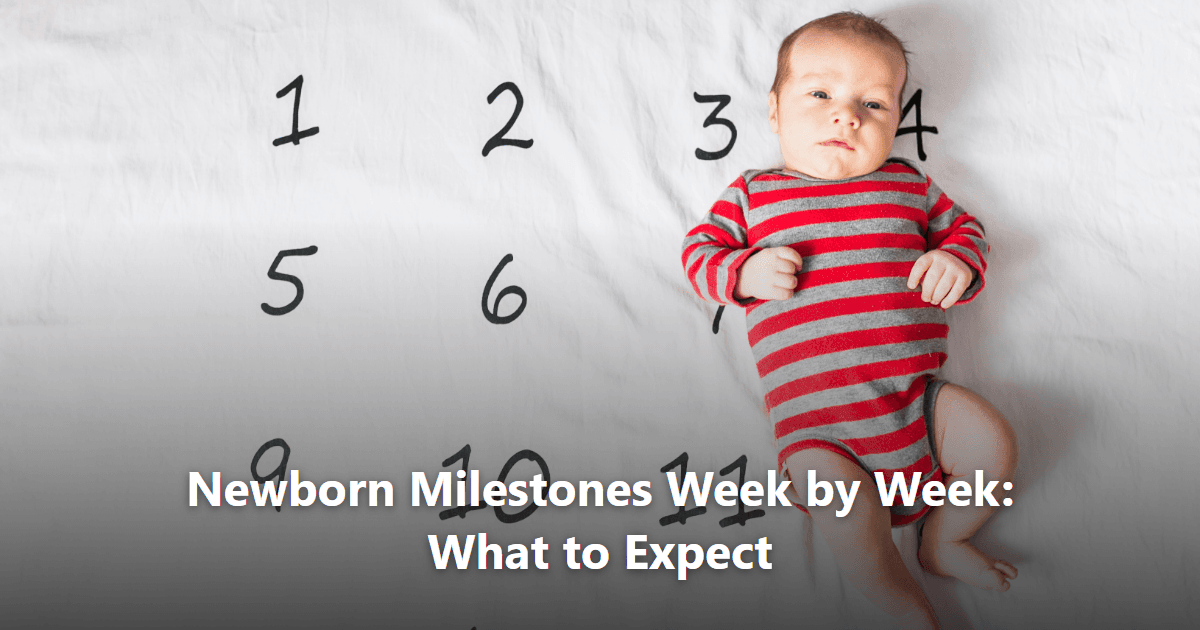
Newborn Milestones Week by Week: What to Expect
Discover newborn milestones week by week. what's normal, how to support development, and when to call your doctor. Feel confident, not anxious.

By Anat Furstenberg, Child Development Specialist · 20+ years
Last updated: June 5, 2026·6 min read
arrow_downwardJump to section
Key Takeaways
- check_circleNewborn development in the first weeks is built on responsiveness: your consistent, sensitive reactions to your baby's cues are among the most powerful developmental tools available to you.
- check_circleEye contact, touch, voice, and movement all work together to support your newborn's sensory, social, and cognitive development from the very first days of life.
- check_circleWeek by week milestone guides are helpful frameworks, not strict timelines. Every baby develops at their own pace, and gentle consistency from you matters far more than hitting exact dates.
If you're up at 2am searching for newborn milestones week by week, first of all: you are doing an amazing job. The fact that you want to understand what your baby is going through, and whether they are on track, shows just how dedicated you are as a parent. The early weeks with a newborn can feel overwhelming, especially when you are not sure what to expect or what is considered typical. The good news is that newborn development in those first weeks follows a beautifully logical sequence, and knowing what to look for can replace a lot of that 2am anxiety with confidence and even genuine excitement. In this post, we will walk you through what is happening developmentally in those precious early weeks, what you can do to support your baby, and when it makes sense to check in with your doctor.
What Is Actually Happening During Your Newborn's First Weeks
The first thing to understand about newborn milestones is that development is not a race. Every baby arrives with their own timeline, and the week by week framework is best understood as a general guide rather than a strict checklist. That said, there is a genuinely remarkable amount of development happening in those early weeks, and understanding it can help you feel more connected to your baby and more confident in how you support them.
From the very first day of life, your newborn is already communicating with you. Crying is their primary language in these early weeks, and it is a sophisticated one. Your baby cries to tell you they are hungry, cold, overstimulated, or simply in need of closeness. Your role in those first days and weeks is not to have all the answers, but to respond sensitively and consistently. According to developmental specialists, each time you respond to your newborn's cues, you are teaching them that communication works and that the world is a safe place. That responsiveness is one of the most powerful things you can do for your baby's long term development.
Eye contact is another cornerstone of early newborn development. From the very first days, your baby is drawn to your face. Making frequent, warm eye contact with your newborn helps them learn to recognize you, begin to imitate your expressions, and build the foundations of social connection. This is not just sweet parenting advice, it is a core part of how baby brain development unfolds in those earliest weeks. The visual system is one of the first sensory pathways your baby begins to use intentionally, and your face is their favorite thing to look at.
Touch is another profoundly important channel of development in the newborn period. When touch is pleasant, appropriate, and consistent, it can have a meaningful impact on your baby's emotional and physical development. Skin to skin contact, gentle holding, and responsive caregiving all send messages to your baby's developing nervous system that they are safe, loved, and supported. These early sensory experiences are not extras. They are foundational.
Around 8 to 10 weeks, one of the most exciting early milestones appears: the first true social smile. Before this point, your baby may have smiled reflexively, often during sleep or in response to gas. But around 8 to 10 weeks, that smile shifts into something different. It becomes voluntary, joyful, and directed at you. This is a key developmental moment that marks the beginning of genuine back and forth social communication between you and your baby. The CDC's developmental milestones for 2 months highlight this social smile as one of the most meaningful early signs of healthy development.
Across these first weeks, your baby is also developing their sensory awareness in rich and layered ways. They respond to your voice, your smell, the feeling of being held, and the rhythm of your movements. Communicating through touch, voice, eye contact, and gentle movement at the same time creates a richer sensory environment that supports your baby's communication development and deepens your connection. You do not need special equipment or structured activities for this. Simply being present, responsive, and engaged during feeding, changing, and holding is genuinely enough in the earliest weeks.
As you move through weeks four to twelve, you will begin to notice your baby becoming more alert during their awake periods, tracking your face and objects with their eyes, and starting to make small cooing or gurgling sounds. These sounds are the very first seeds of language. When you talk back to your baby, narrate your day, or sing during diaper changes, you are nurturing those seeds in a very real way. The American Academy of Pediatrics consistently emphasizes that talking and reading to babies from birth supports language and cognitive development in lasting ways.
Physical development in the newborn weeks centers largely on muscle tone and head control. Your newborn's neck muscles are still developing, which is why head support is so important when holding them. Over the first several weeks, with gentle supported tummy time exercises, your baby will begin building the strength in their neck, shoulders, and core that will eventually lead to holding their head up independently. Even just a few minutes of supervised tummy time each day from the earliest weeks makes a meaningful contribution to these physical milestones. A helpful resource for tracking how all these pieces fit together is a baby milestone tracker, which lets you follow your baby's unique journey week by week in one organized place.
Practical Tips for Parents
- Make eye contact during every feeding, diaper change, and hold. Your face is your baby's most important learning tool in these early weeks, and those moments of connection directly support social and cognitive development.
- Respond to your baby's cries consistently and sensitively. You cannot spoil a newborn by responding too quickly. Every consistent response teaches your baby that communication works and that they are safe.
- Incorporate gentle tummy time from the very first weeks, even starting with just two to three minutes at a time on your chest or a firm surface. This builds the neck and core strength needed for upcoming physical milestones.
- Talk, sing, and narrate throughout your day. Your baby does not need you to perform or teach. Simply hearing your voice in a warm, responsive way supports language development and deepens your bond.
- Engage multiple senses at once during interaction. Combining touch, voice, eye contact, and gentle movement creates a richer experience for your baby and accelerates their overall development in these early weeks.
When to Talk to Your Doctor
Most newborns develop beautifully within their own unique timeline, but there are a few signs worth mentioning to your pediatrician. If your baby seems unable to make eye contact by around 6 to 8 weeks, shows no response to your voice or touch, cries in a way that feels impossible to soothe consistently, or is not showing any social smile by around 10 to 12 weeks, it is always a good idea to have a conversation with your doctor. Early support makes a significant difference when needed. If you are curious about developmental delays, reaching out sooner rather than later is always the right call. Trust your instincts as a parent.
Frequently Asked Questions
Want to go deeper?
Get the full development system for your baby
Week-by-week guidance, milestone tracking, and expert video classes, all in one place.
See Plans & Pricingarrow_forwardYou May Also Like
How to Help Your Baby Reach Developmental Milestones
Wondering if you're doing enough to help your baby hit milestones? Learn practical, science-backed ways to support your baby's development every day.
Read Morearrow_forward
How to Know If Your Baby Is Hitting Their Milestones
Wondering if your baby is on track? Learn what milestones really mean, how development unfolds, and when to talk to a professional.
Read Morearrow_forward
Is Your Baby Hitting Their Milestones
Worried your baby is on track? Learn how to read baby milestones with confidence across movement, communication, and sensory development.
Read Morearrow_forward