Baby Milestones: What Normal Development Actually Looks Like
Milestone anxiety keeping you up at night? Learn what healthy baby development really looks like, why variation is normal, and when to call your pediatrician.

By Anat Furstenberg, Child Development Specialist · 20+ years
April 9, 2026·5 min read
arrow_downwardJump to section
Key Takeaways
- check_circleBaby milestones describe a developmental range, not a fixed schedule. Variation between babies is expected and completely normal.
- check_circleResponsive caregiving, eye contact, touch, and sensory-rich interaction are the most powerful things you can do every day to support your baby's development.
- check_circleEarly professional guidance through a structured program or specialist support can help you feel confident and informed at every stage of your baby's growth.
If you are reading this at 2am, heart racing, wondering whether your baby is hitting the right milestones at the right time, you are not alone. Milestone anxiety is one of the most common worries new parents carry, and the fact that you are paying such close attention is already a sign of how deeply you care. The truth is, baby development is rarely a straight line. Babies grow in bursts, pause, consolidate, and then leap forward again. In this post, we are going to walk through what healthy milestone progression actually looks like, why variation between babies is completely normal, what you can do every day to support your baby's growth, and when it genuinely makes sense to check in with your pediatrician. Take a breath. You are in the right place.
Understanding Baby Milestones: What Normal Development Actually Looks Like
One of the most important things to understand about baby milestones is that they describe a range, not a single precise moment. Every baby is working on their own internal timeline, shaped by their temperament, their environment, the amount of floor time they get, and the quality of interaction they experience with the people who love them most. What the research and clinical experience consistently shows is that the richness of a baby's early experiences plays a huge role in how and when milestones unfold.
From the very first days of life, your baby is already communicating and developing. Newborn development begins long before babies can roll, sit, or crawl. In those earliest weeks, your newborn is learning to recognize your face, your voice, and your smell. They communicate through crying, which is their only available language at birth. Every time you respond to that cry, whether it is with a feed, a cuddle, or a gentle reassurance, you are teaching your baby something profound: that the world is safe, that communication works, and that they are heard. According to research supported by the American Academy of Pediatrics, responsive caregiving in the earliest months lays the groundwork for emotional, cognitive, and physical development across childhood.
Around 8 to 10 weeks, something magical happens. Your baby's smile shifts from an involuntary reflex to a genuine, joyful response when they see your face. This is not a small thing. That social smile marks the beginning of true back-and-forth communication, the earliest form of conversation your baby can have. Eye contact during this period is enormously important. It is the single most foundational skill for your baby's communication development, and every warm gaze you exchange is actively wiring their growing brain.
As babies move toward the 6 to 9 month window, the developmental picture becomes even more exciting. At this stage, your baby begins to understand that they have the ability to reach an object close to them through making eye contact, reaching their hand out, and rolling over. They are starting to grasp that they can act on the world around them, and this is the foundation of independent movement. Baby development at 6 months involves a beautiful convergence of physical, sensory, and social growth, and no two babies will move through it in exactly the same sequence or at exactly the same speed.
The development of movement, particularly baby crawling, is a perfect example of how varied normal development can look. Some babies crawl early and enthusiastically. Some babies shuffle, roll, or bottom-scoot and skip traditional crawling altogether. What matters far more than the exact method of movement is whether your baby is showing curiosity, engagement, and a desire to explore. Supporting crawling through tummy time exercises from early on gives your baby the strength and body awareness they need, but it does not guarantee any particular schedule.
The baby brain development happening beneath the surface during all of this is staggering. Every sensory experience, every touch, every sound, every face-to-face interaction is sending signals to your baby's brain and building neural connections that will support everything from language to movement to emotional regulation. Touch in particular has been described by developmental specialists as the first and most important communication between a baby and their caregivers from the very first moment they enter the world. When touch is pleasant, appropriate, and consistent, it has a profound impact on a baby's character, emotional wellbeing, and physical development.
The World Health Organization emphasizes that early stimulation and responsive caregiving are among the most powerful factors in supporting healthy child development globally. This is not about doing everything perfectly. It is about showing up, engaging your baby's senses, and responding with warmth and consistency day after day.
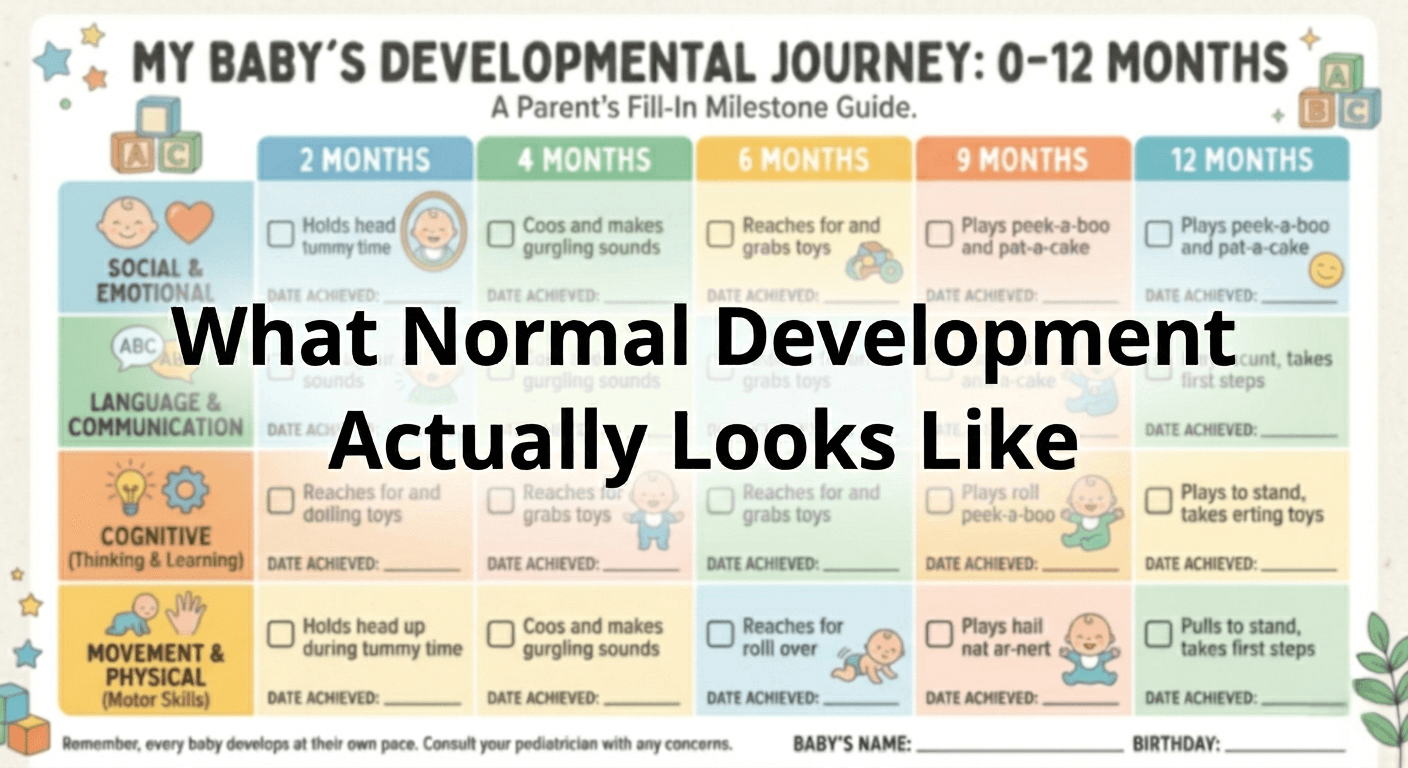
Using a baby milestone tracker can help you see your baby's progress across multiple domains at once, rather than fixating on any single skill. Development is multidimensional. Your baby might be ahead in social communication and taking a little longer with gross motor skills, or vice versa. Both scenarios can be completely typical.
Practical Tips for Parents
- Make eye contact a daily priority. Warm, frequent eye contact during feeding, play, and diaper changes actively supports your baby's social and cognitive development from the very first weeks of life.
- Respond consistently to your baby's cries and cues. Every sensitive response you give teaches your baby that communication works and builds the secure foundation they need to develop confidently.
- Incorporate daily tummy time from early on. Even short, gentle sessions build the neck, shoulder, and core strength your baby needs for rolling, sitting, and crawling later on.
- Engage multiple senses during playtime. Talking, singing, touching, and making eye contact all at once creates a rich sensory environment that accelerates your baby's development across all areas.
- Explore online baby classes to get structured, week-by-week guidance from qualified developmental specialists so you always know what to focus on and why.
When to Talk to Your Doctor
Most milestone variation is completely normal, but there are some signs worth bringing up with your pediatrician sooner rather than later. These include an inability to make eye contact, no social smiling by around 3 months, no reaching or grasping by 6 months, no babbling or back-and-forth communication by 9 months, or crying that cannot be soothed. If your baby has a known condition or you are navigating concerns around developmental delays, early support makes a real difference. Your pediatrician is your partner here, and reaching out is always the right call when something feels off to you as a parent.
Frequently Asked Questions
Want to go deeper?
Get the full development system for your baby
Week-by-week guidance, milestone tracking, and expert video classes, all in one place.
See Plans & Pricingarrow_forwardYou May Also Like
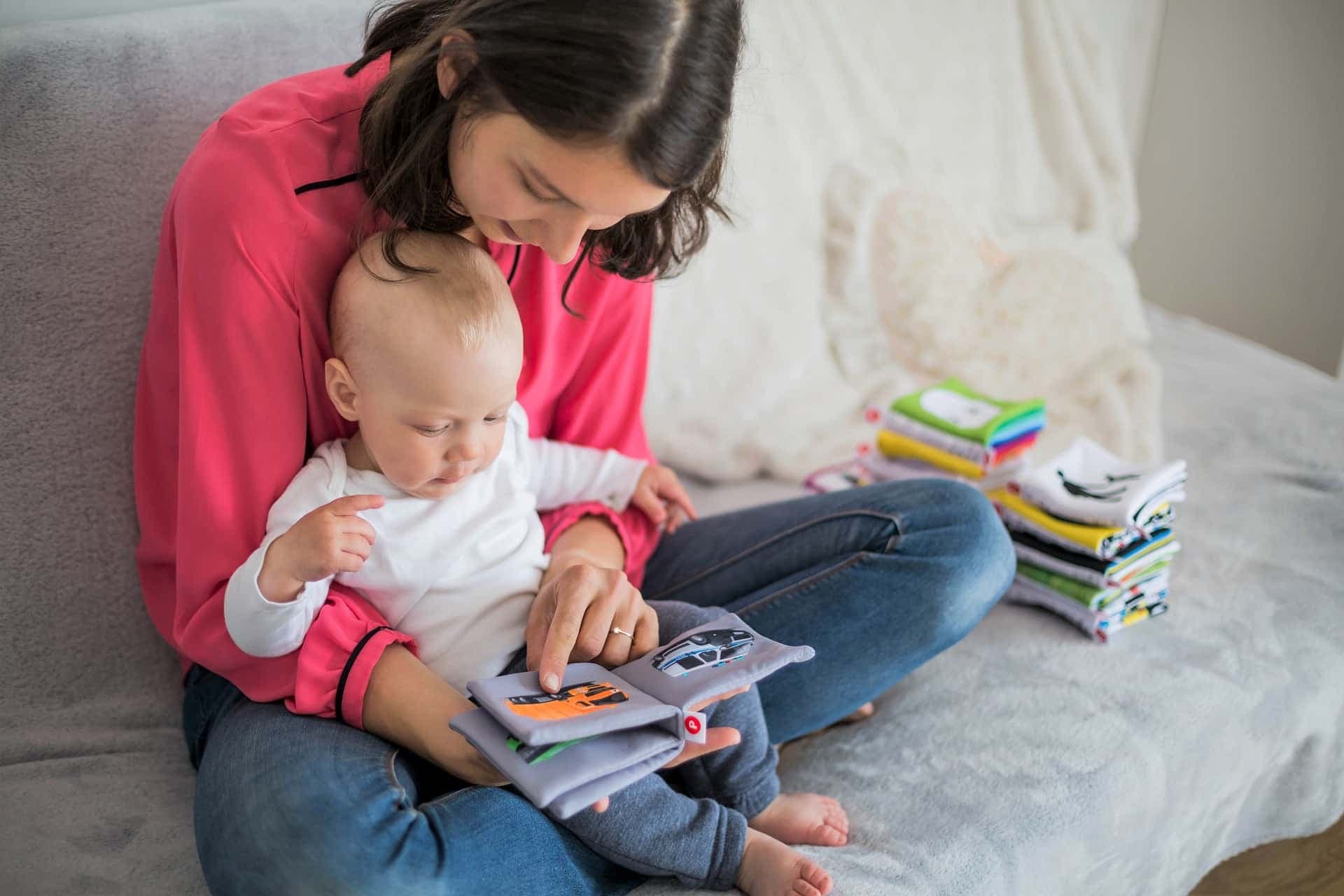
6 Month Milestones: Tracking Your Baby's Development and what to avoid.
Babies often experience a variety of physical, cognitive, and social milestones throughout their first six months of life. In terms of physical development, your baby could be able to roll over from their stomach to their back and elevate their head and chest while lying on their stomach. Additionally, they might be able to sit…
Read Morearrow_forward
Baby Crawling Guide: Benefits & Tips for Parents
The importance of baby crawling for physical and cognitive development: Crawling is an important milestone in a baby's development, as it helps to develop their physical and cognitive skills. From a physical standpoint, crawling helps to build strength in the muscles of the arms, legs, and core, as well as improve coordination and balance. This…
Read Morearrow_forward![Stages of Crawling, Pre Crawling; Part Of One-On-One With Anat. [BabyPillars].](/_next/image/?url=%2Fblog%2Ffeatured-pre-crawling-Pre-Crawling-baby.jpg&w=3840&q=75)
Stages of Crawling, Pre Crawling; Part Of One-On-One With Anat. [BabyPillars].
Pre crawling, the stages of crawling, this video is part of one-on-one session with Anat. One-On-One Online Private Sessions With Anat. Parenting classes are great, but sometimes you need more personalized advice. In this video you can see a personal private session that Anat gave to one of BabyPillars members in regards to pre crwaling…
Read Morearrow_forward